

Reading and Literacy
Reading is part of our foundational skills. In fact, it is the single most important skill we teach. Strong reading skills open the door to learning across every subject, support mental wellbeing, build vocabulary and confidence, and give young people the tools to make the most of life after school. When children read regularly they make faster progress across the curriculum and develop stronger language, reasoning and concentration skills. National Literacy Trust
-
Reading improves attainment across subjects. Schools that build daily reading habits see improvements in vocabulary, comprehension and overall achievement. National Literacy Trust
-
Systematic phonics and structured programmes work. Programmes like Read Write Inc and Lexia have an evidence base showing benefits when implemented with fidelity. EEF
-
Fluency and comprehension are distinct skills. We teach decoding (phonics), fluency (speed and accuracy) and comprehension (understanding, inference and vocabulary) deliberately — different tools help each goal. EEF
-
Reading for pleasure matters for motivation and wellbeing. Enjoyment correlates with frequency of reading and with positive emotional outcomes. That’s why tutor-time reading and choice are central to our approach.
Our approach — proven programmes, daily practice, and joyful reading
We combine research-backed programmes with daily practice and opportunities to read for pleasure. Here’s how and why each part matters.
Lexia every day in Year 7
In Year 7 every student spends time on Lexia each week: an adaptive, structured literacy programme that fills gaps in decoding, fluency and comprehension and gives targeted practice where it’s needed most - word study, grammar and comprehension. Lexia’s materials are supported by a substantial body of efficacy research showing measurable gains when used as intended — particularly when schools use daily, structured practice alongside classroom teaching. This is why we use Lexia daily in Year 7: it gives every pupil a consistent foundation as they move from primary to secondary. Click here for the research behind the program - Lexia
Read Write Inc (RWI) — our early reading intervention
For pupils who need intensive phonics or catch-up teaching we use Read Write Inc. (RWI). RWI is a systematic synthetic phonics programme designed for early readers and as an intervention for older pupils who still need to master decoding. Our Literacy team work with students individually and in small groups to ensure they make rapid progress. Large-scale evaluations — including an EEF trial — show RWI is an evidence-based approach to develop decoding and early reading skills, and it is widely used across UK schools as a targeted intervention. Click here for the research behind the programme - Ruth Miskin Literacy
Reading for Pleasure
-
Reading for pleasure (books students choose for fun) is strongly linked to improved wellbeing, empathy and lifelong reading habits. When students enjoy reading they read more — and more reading leads to better skills and outcomes. The National Literacy Trust and other surveys show enjoyment predicts frequency and skill gains. National Literacy Trust
-
Reading for betterment means reading with purpose: building vocabulary, tackling complex texts, practising exam-style reading and expanding subject knowledge. Programs like Lexia and RWI focus on the skills that make reading for betterment possible (decoding, fluency, comprehension strategies), while tutor-time reading supports the transition from learning to read to reading to learn. EEF
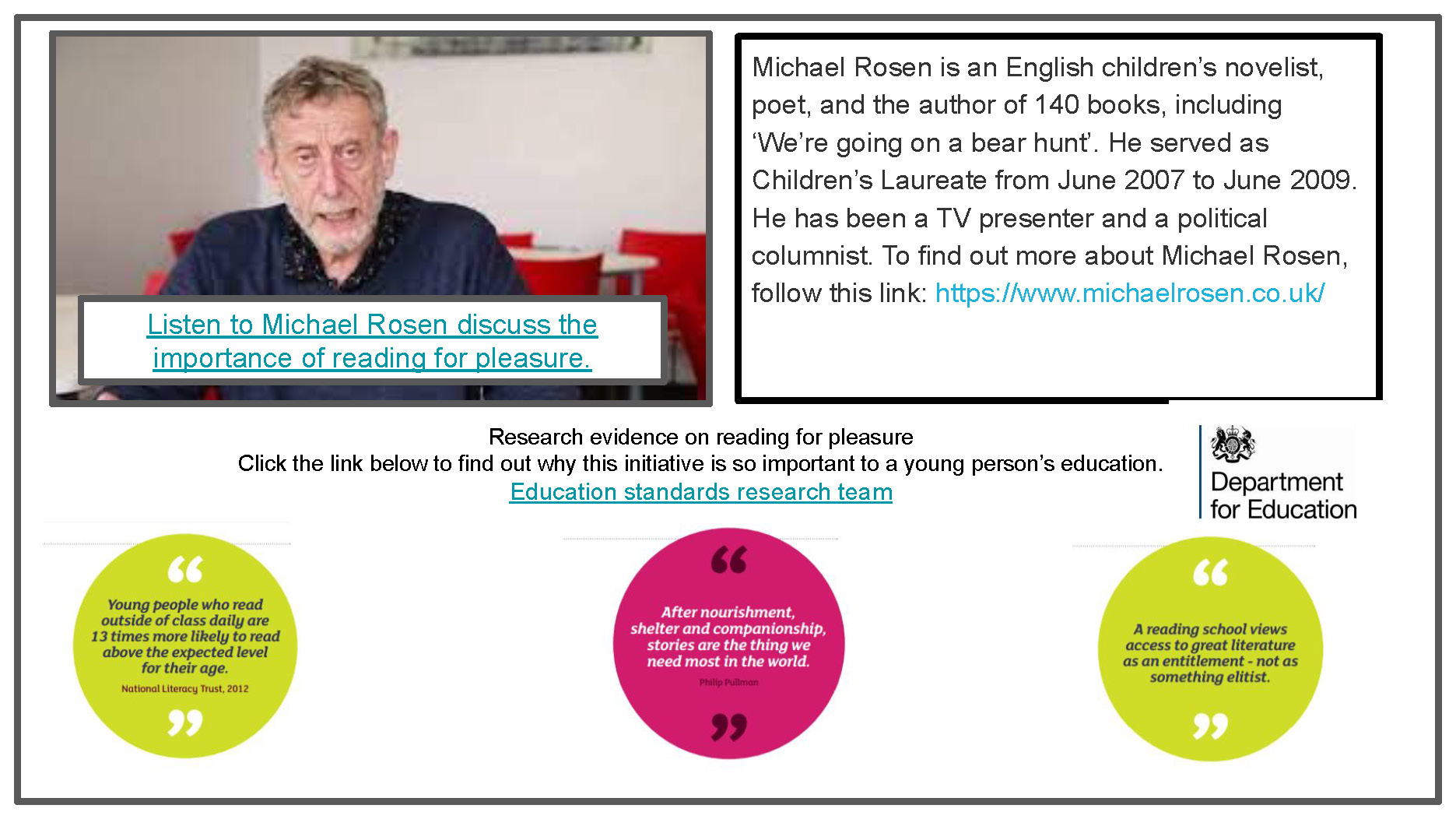
Reading and Literary Canon
Tutor-time sustained reading in Years 8–9
We run a structured tutor-time reading programme in Years 8 and 9. Short, regular sessions (10–20 minutes) of tutor-led reading builds fluency, vocabulary and reading stamina over time. Research and guidance from literacy specialists show that whole-class and tutor-time reading routines increase engagement, boost confidence with more challenging texts, and improve comprehension when teachers support the experience with questioning and discussion. Students listen to their tutor read, or may follow an audiobook, whilst they track the text with their reading ruler.
We also provide ‘Recommended Reads’ for all year groups which can be found below.





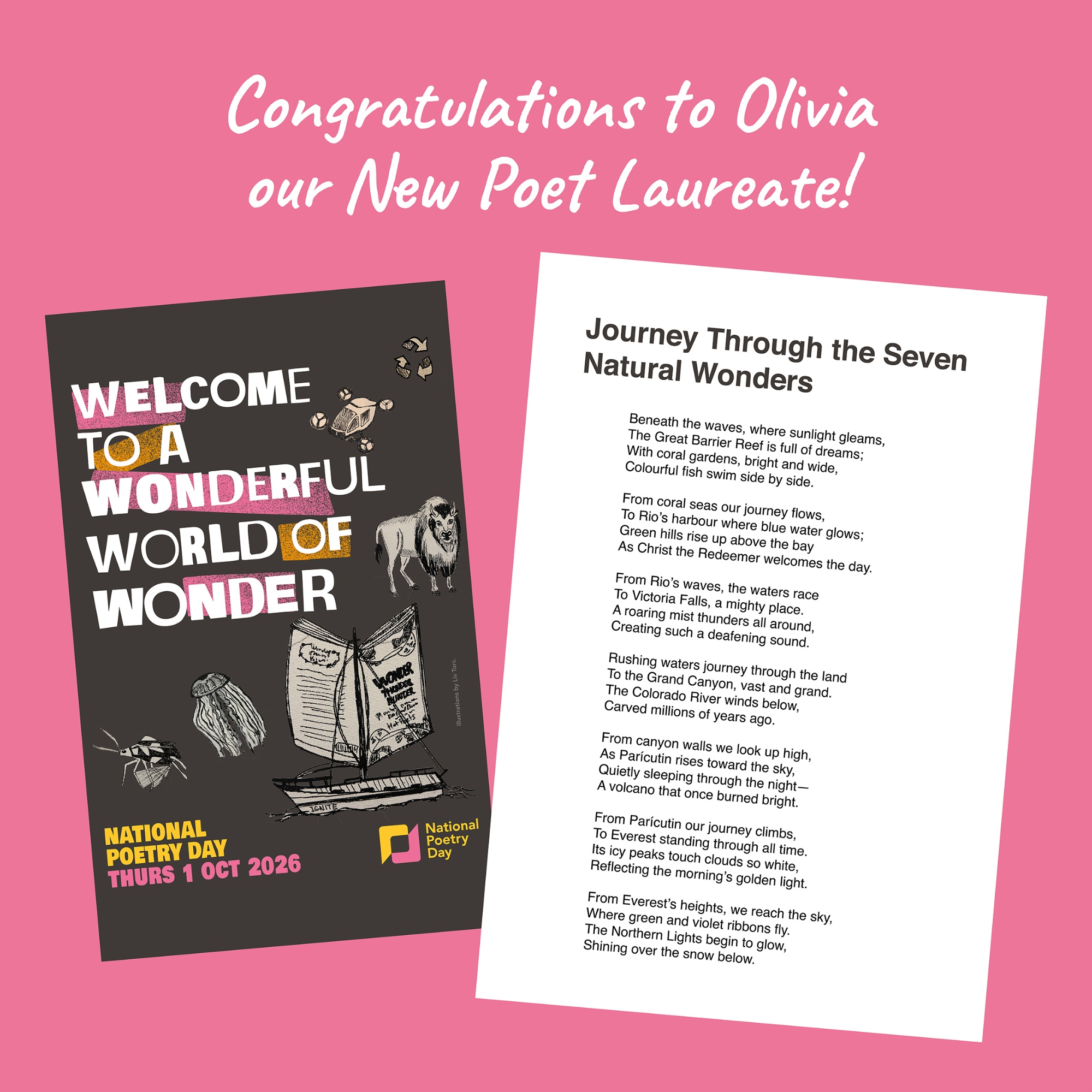
Poet Laureate
How you can help at home
-
Ask about Lexia. Encourage short, regular sessions and celebrate progress. Ask your child to show you what they’re working on. Lexia
-
Read together. Older children still benefit from shared reading: discuss characters, predict what will happen, and ask about new words. National Literacy Trust
-
Use the right format. Audiobooks can motivate reluctant readers and build comprehension; they work best alongside print reading for spelling and writing skills. The Guardian
-
Provide time and choice. Let students pick books they enjoy as well as books that challenge them. A balance of pleasure and betterment is the most sustainable route to strong lifelong readers. National Literacy Trust
FAQs
-
Q: My child says they don't enjoy reading — what can I do?
A: Start small and follow their interests (comics, sports articles, game guides or audiobooks). Short, successful reading experiences build confidence. We can suggest age-appropriate titles and local library resources. National Literacy Trust -
Q: How will I know if Lexia or RWI is working for my child?
A: We monitor progress with assessments and will report outcomes at parents’ evenings. You’ll see improvements in speed, accuracy and comprehension over weeks and months if practice is consistent. Lexia -
Q: Do reading rulers really help?
A: Many teachers and reading specialists use them because they support visual tracking and fluency. They’re especially helpful for early or struggling readers as part of a wider programme. Ask your child’s teacher for a demonstration. The Reading Specialists